

[Ep-16] Araceae White Rhino Alocasia — Alocasia Silver Drangon — Kokedama Planting Key Points

Araceae White Rhino Alocasia - Alocasia Silver Drangon - Kokedama Planting Key Points
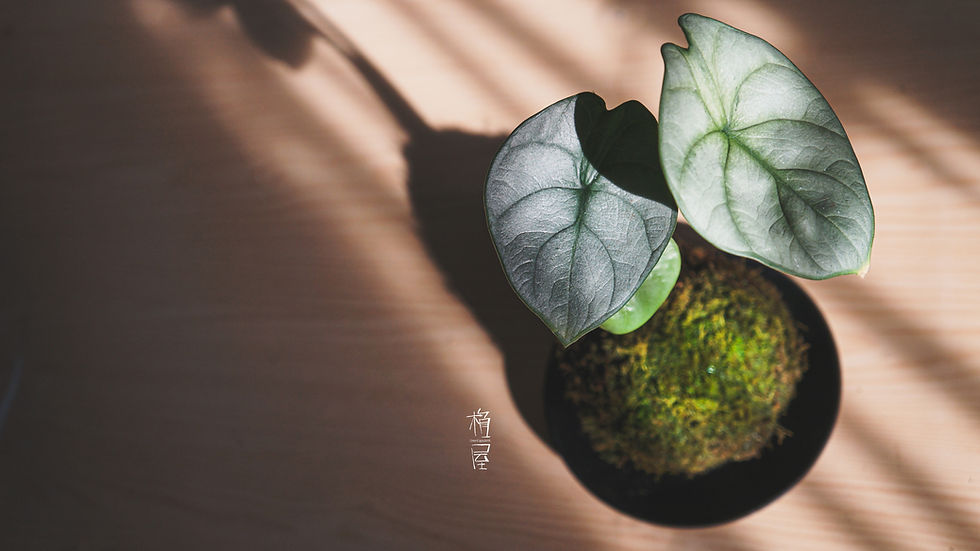
White Rhino Alocasia / Silver Dragon Alocasia (Alocasia Silver Dragon) is a small lithophytic variety. The leaves are thick and have a color and texture a bit like rhino skin — 🥰 touching them when idle is very soothing 😌
Important to note ⚠️: As a member of the Araceae family, it is toxic. It is harmful to pets and can poison humans if ingested.
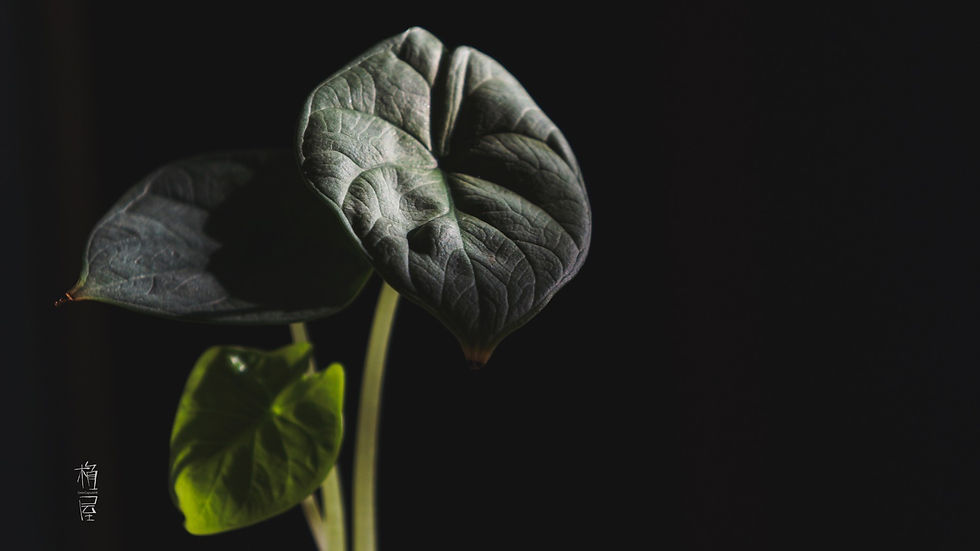
Everyone’s growing environment is different, so learn to observe.
For a plant, when you first bring it home it usually needs time to adapt to the new environment. The more the environment matches its living habits, the faster it will adapt. Sometimes, because of environmental changes, the plant will instinctively speed up metabolism to adapt, and you may see some leaf drop — this is normal. Observe the plant’s changes; taking photos and keeping records is a good way to compare differences after a period of cultivation.
Getting to the main points:
Small lithophytic varieties have leaves with an obvious coriaceous (hard, shell-like) texture, firm and thick.
These Alocasias do not require very high ambient humidity, but they are more sensitive to waterlogging. They require higher soil aeration and drainage and prefer soil with more sand and grit. Because the leaves are coriaceous and reduce evaporation, they tolerate sun relatively well, but they have the poorest cold tolerance among varieties.
Light:
Alocasia Silver Dragon grows in tropical rainforest areas where it is shaded by taller trees and leaves in its habitat, so it prefers diffuse light or sunlight under shade.
The lighter-leaved Silver Dragon prefers brighter light; it can be placed in semi-daylight indoor or outdoor spaces and can tolerate longer, more intense sunlight, but avoid direct scorching sun.
Also avoid spraying wet leaves under direct sun, which can cause sunburn spots on the leaf surface.
Our other article about light:
https://www.greencapsulehk.com/post/ep-04-sunlight-full-partial-shade
Temperature:
Optimal growth temperature is 20–30℃. When temperature falls below 15℃ growth stalls and the plant enters dormancy; in winter, be sure not to place it in a drafty spot.
In winter it can receive some sunlight, but avoid prolonged sun exposure that can scorch the leaves.
Water:
April–September is its vigorous growth period. During this time it requires moist soil and higher ambient humidity, while the soil must still have good aeration; provide ample water.
However, note that if soil and air humidity are too high, the underside of leaves can show translucent areas from cell-wall rupture.
When potting soil becomes dry, leaves will soften and droop, sometimes with wavy edges.
After watering they quickly recover, so the plant has some drought tolerance.
During the hot summer, leaf transpiration is high and water demand increases; lack of water easily causes leaf wilting. You can mist the leaves, but you must avoid waterlogging the pot, which would cause root rot.
For potted cultivation, water based on soil dryness. For kokedama, decide by the feel and weight of the moss ball. Generally, when the soil is dry water thoroughly; when the moss ball becomes hard and light, soak it.
(We discuss watering methods/timing in this post: https://www.greencapsulehk.com/post/ep-03-kokedama-care-essentials

*Actual conditions may need adjustment depending on indoor environment and weather.
*If possible, it is recommended to use filtered water or tap water that has been left to sit overnight (to dissipate chlorine/fluorine).
*Optional use of foliage plant nutrient solution: once a month, one small vial diluted with water (1:1).
*According to the American Society for the Prevention of Cruelty to Animals (www.aspca.org), plants of the Araceae family are toxic to pets — avoid excessive pet contact or ingestion.
Thanks for reading to the end!
If you have other questions, feel free to leave us a comment 😊
We update articles monthly. If you find our content useful please register your email at the bottom of the webpage,
to subscribe to our free updates.
<<Click here for our YouTube Channel>>
----More plant and pot design videos are continuously being updated----
Kokedama workshop intro:
Kokedama workshop :
https://www.greencapsulehk.com/kokedama-intro
Choose a moss bonsai workshop that interests you and sign up to come to our studio to explore with us!
For more about mosses and bonsai, you would like to come and join our workshop:https://www.greencapsulehk.com/workshops
For the latest works, workshops and other information please click :
Stay close with us:
https://www.instagram.com/greencapsulehk/
You can also find moss bonsai materials and DIY kits here
Also can grab some bonsai supplies and DIY kit from here:
https://www.greencapsulehk.com/shop

![[Ep-32] Winter Foliage Plant Care Essentials](https://static.wixstatic.com/media/1bdabd_008aec3c75a343439363620216e6a05b~mv2.png/v1/fill/w_980,h_980,al_c,q_90,usm_0.66_1.00_0.01,enc_avif,quality_auto/1bdabd_008aec3c75a343439363620216e6a05b~mv2.png)
![[Ep-31] Vintage-Style Plant LED Light — TSKUYOMI 10W AKADAMACHAN MODEL](https://static.wixstatic.com/media/1bdabd_5b992266ad524aa6b9b911de672614ac~mv2.jpg/v1/fill/w_800,h_800,al_c,q_85,enc_avif,quality_auto/1bdabd_5b992266ad524aa6b9b911de672614ac~mv2.jpg)
Comments