

EP-42 Barrel Plant Light: The President on Plant-Light Design Through a Hairdresser’s Lens

Why would a grow-light company put how we see plants at home before sheer brightness?
Barrel Plant Light president | Designing plant lights through a hairdresser’s lens

Many plant lights enter a room as equipment first.
The light is strong enough and the plant survives, but once that lamp sits in the living room, the scene doesn’t invite you to linger.
Rows of red and rows of blue LEDs cast a purplish glow: the leaves are lit, but the room has gained an obvious piece of apparatus.
It’s common on the market, and for a long time nobody thought it needed changing.
When I interviewed Barrel Plant Light president Mr. Daimon, the first thing that made me pause
was how he seemed, from the very start, to think of plant lights as part of everyday interior life.
He didn’t just ask whether plants get enough light; he also asked whether people would sit beside that light and really look at their plants.
What caught me even more was who he was before making plant lights.
Before founding Barrel Plant Light, the president was a hairdresser.
He says the first source of fulfillment was making clients look better through hair design and then hearing their thanks in person.
In those years he also grew interested in interior design, in making things, in running a space,
and kept coming back to one question: how to grow plants beautifully indoors.
He already loved plants, and the fact that plants aren’t easy to grow well
wasn’t a hassle to him; it was the fun part.

A hairdresser’s daily work is really about what happens after light falls on a person’s contours—how that person is seen.
That sensitivity seems to have found its way into his plant-light design.
He admits he arrived at making plant lights because he wanted to grow plants indoors and found the light nowhere near enough;
and the lights on the market that truly grow plants well mostly looked industrial and commercial, with red-blue LED light that wasn’t suited to viewing.
So he wanted to make a lamp that answered both at once: help plants grow healthily, and make people willing to place it in the living room.
The first model, SUN-18W, came from that idea: it looks like white light, but its wavelengths are tuned specifically to the range that benefits photosynthesis.
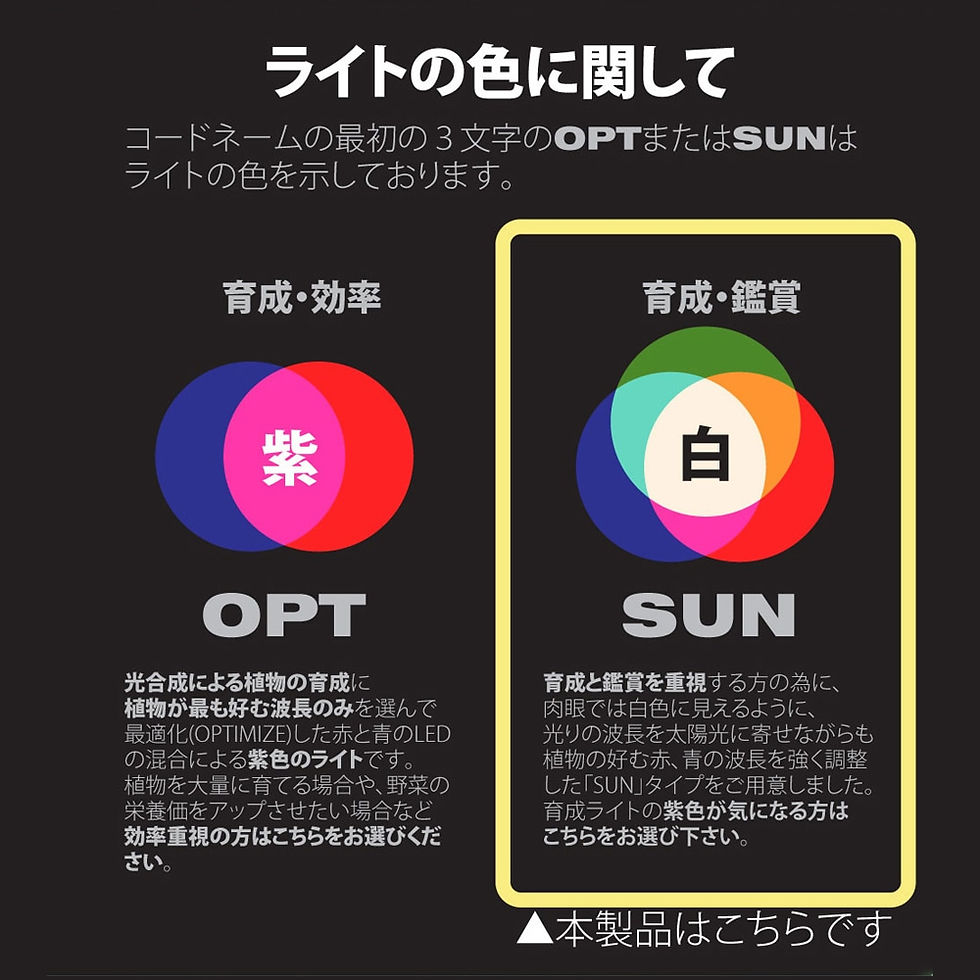

They couldn’t yet make an original housing then,
so they took an existing shell, swapped the lens, reworked the optics inside, and insisted on tuning a distinctly Barrel quality of light.

He remembers seeing the finished unit for the first time, that moment of switching it on at dawn,
and for a moment thinking it was the real sun.
Three design principles
The more you understand Barrel, the more you’ll notice this 'at once' threaded through the details.
First, color. About ninety percent of plant lights on the market are black,
because black reads professional, commercial.

Barrel, however, offers white.
The president’s reasoning comes from everyday life:
Put a black fixture in a living room or bedroom and it easily turns into a conspicuous, imposing piece of equipment.
White, on the other hand, recedes into the space and lets the illuminated plant return to the role of protagonist.
He says plainly that many customers who care about home coordination already prefer white,
and will seriously weigh whether the lamp harmonizes with their furniture and finishes.
He wants to serve not only growers, but also those who care just as much about how the room looks.

Next, that signature octagon.
If all you wanted was to spread light, a circle would do.
But the president says if the shape were also a circle,
the lamp would quickly look like everything else on the market and lose its distinctiveness.

The octagon is his balance between function and character:
it keeps the ability to deliver broad, diffuse light, while bringing the crispness of straight lines.
He even pictured something farther out: when several lamps are lined up,
circles blur into a fuzzy constellation, while octagons arrange into clear edges and order.
One shape that speaks to industrial design, taste, and display all at once.

Even the modularity he’s most often asked about starts from this: plants and rooms both change.
He noticed every customer’s plants and placement differ a lot,
so the equipment itself should be able to adjust and recombine.

Questions that come before brightness
POLE STAND can raise or lower the distance as plants grow,
Clamp Lamp Socket makes the lamp head universal—you can clamp it to a desk or mount it on a pole, and wall-mount accessories are coming. He says the true value of modularity is that the light you’ve already bought won’t be wasted:

When the plant changes or the room changes, just swap the stand or the mounting method,
and the same lamp can keep growing with the plant, without starting over each time.
Put these details together and Barrel’s difference from other brands starts to surface.
While many brands race to push PPFD higher and make light ever stronger,
the president is solving something else:
How do we make people want to stay in the same space with their plants a little longer?
He even feels plants and people actually want similar things:
light, moving air, a comfortable temperature.
So he doesn’t just want to make lights for plants; he’s begun to ask whether the optical knowledge built for plants over the years
can make everyday lighting people will want to keep on.
He says his ten-year goal is, through light, wind, and air,
to bring an environment closer to nature indoors, so that “bringing nature into the room” gradually becomes a way of life.
More than becoming the biggest grow-light maker, that direction matters to him.

This judgment isn’t a slogan; he has a very concrete way to test it.
What the president learned from users
He says what really tells him he is on the right path is not beating anyone on specifications,
but a line from a user: the plants are thriving; the mood of the room is better; I spend more time zoning out, just looking at the plants.
Many of these photos and notes are shot and posted online by users themselves.
He keeps in mind that so many benefits of grow lights are hard to explain with numbers alone;
you have to see how the lamp is actually woven into someone’s life and what changed in the plants for that appeal to land.
Some embed the light in shelving; some hang it from the ceiling;
some simply treat it as a piece of home decor. These uses he never thought of taught him a lot in return.

Ending
I like this angle a lot,
because it quietly widens how we judge a lamp.
A spec sheet can tell you whether this light will keep a plant alive;
but once the lamp is truly in the room, you’ll want to know something else:
will this light make people want to stay, and look at their plants a few more times?
So next time you choose a lamp, beyond hunting for the highest number,
you might ask yourself one more thing:
which one will make my space and my plants
look most like the life I want?
Related reading:

[Ep-33] Barrel Plant Light: ROKI-Octagon-50W

[Ep-40] Barrel Plant Light-Owner’s Voice [001]

[Guide] Plant environment diagnostics | Start with light, air, and space
![[Ep-32] Winter Foliage Plant Care Essentials](https://static.wixstatic.com/media/1bdabd_008aec3c75a343439363620216e6a05b~mv2.png/v1/fill/w_980,h_980,al_c,q_90,usm_0.66_1.00_0.01,enc_avif,quality_auto/1bdabd_008aec3c75a343439363620216e6a05b~mv2.png)
![[Ep-31] Vintage-Style Plant LED Light — TSKUYOMI 10W AKADAMACHAN MODEL](https://static.wixstatic.com/media/1bdabd_5b992266ad524aa6b9b911de672614ac~mv2.jpg/v1/fill/w_800,h_800,al_c,q_85,enc_avif,quality_auto/1bdabd_5b992266ad524aa6b9b911de672614ac~mv2.jpg)
![[Ep-29] Detaching Offsets from a Pegasus Staghorn Fern](https://static.wixstatic.com/media/1bdabd_6ef788a407764ed0a0a615df5c4f563b~mv2.jpg/v1/fill/w_980,h_551,al_c,q_85,usm_0.66_1.00_0.01,enc_avif,quality_auto/1bdabd_6ef788a407764ed0a0a615df5c4f563b~mv2.jpg)
Comments